
Multi‑Layered Physical Pest Management: Bringing People Back to Enjoy Outdoor Spaces
Public parks, private backyards, vineyards and campsites are built for human connection with nature — but pests keep people indoors. Here's how multi-layered physical pest management changes that.
Public green spaces and private outdoor retreats are designed for human connection with nature. Wetlands, urban parks, botanical gardens, vineyards, residential backyards and campsites are built for relaxation, family gatherings, barbecues and quiet evenings under the stars. Landscape designers invest heavily in plants, pathways, lighting and seating to craft beautiful environments. Yet one persistent problem repeatedly undermines all this careful planning: flying insects and rodents. Even the most beautifully constructed outdoor area becomes barely usable when pest populations surge. Adults suffer itchy bites, and children face greater risks from insect exposure. This is not a regional nuisance; it is a worldwide challenge for anyone who wants to spend time outside.
The Mosquito-Free Park Concept Goes Global
The "mosquito‑free park" concept has emerged as a practical response to this global headache. As we explored in our previous article, the mosquito-free park concept is already reshaping public green spaces worldwide. A well‑known real‑world project in Hangzhou, China, demonstrates how layered physical trapping systems can reshape public green spaces. This initiative deployed outdoor pest capture devices across park grounds, with individual units capturing tens of thousands of flying insects each day. It does not claim to remove every single mosquito from the open environment. The true goal is to suppress pest numbers down to a comfortable threshold, so residents can sit, walk and play outdoors without constant biting pressure.
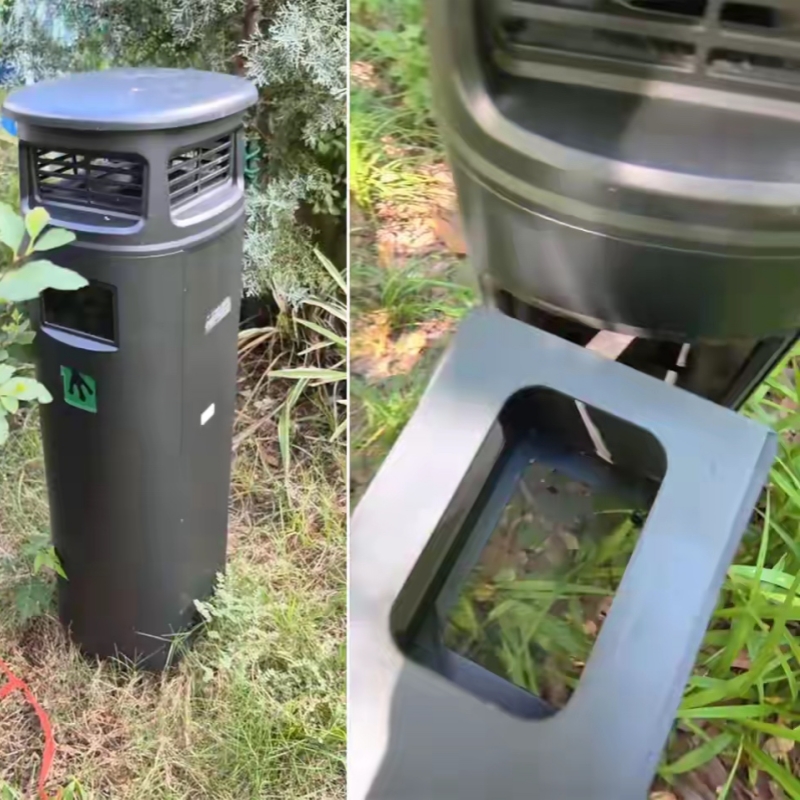 ▲ Solar insect traps deployed in the Hangzhou mosquito-free park pilot project
The idea is now expanding. Legislative discussions in Hong Kong aim to roll out similar mosquito reduction infrastructure across community parks. What began as a single pilot site is evolving into a replicable municipal planning strategy. More cities are integrating physical pest control into new park and wetland designs. Urban planners recognise that beautiful parks remain little more than decorative scenery if visitors cannot comfortably stay after sunset.
Private Landowners Face the Same Battle
This same frustration applies to private landowners. Many homeowners pour time and money into luxurious backyards, gardens and estates. They plant flowers, build patios and set up seating for evening chats and family events. All of this investment loses value when mosquitoes and flying pests make long stays impossible. Outdoor enthusiasts face identical struggles while camping or travelling in recreational vehicles. Nature lovers seek out remote, scenic campsites, yet persistent bugs often cut trips short. Carrying chemical pesticide tanks into the wilderness is impractical, and topical repellent creams only offer limited, temporary protection for human skin. This gap creates strong demand for practical, portable physical pest solutions.
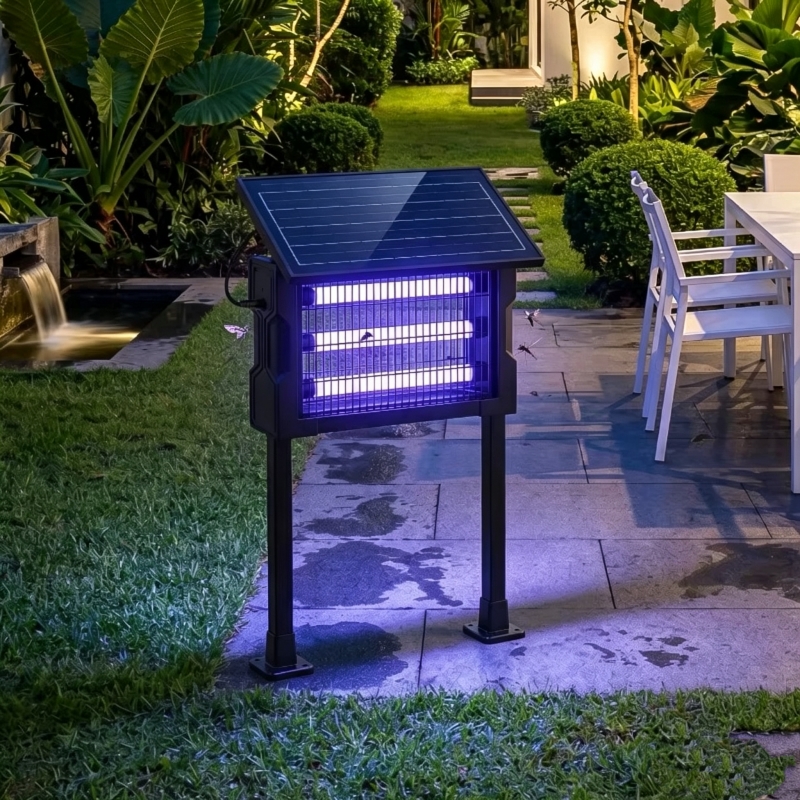
 ▲ A pest-free backyard patio — the goal of multi-layered physical pest management
Solar Insect Traps: Off-Grid, Zero-Electricity Pest Control
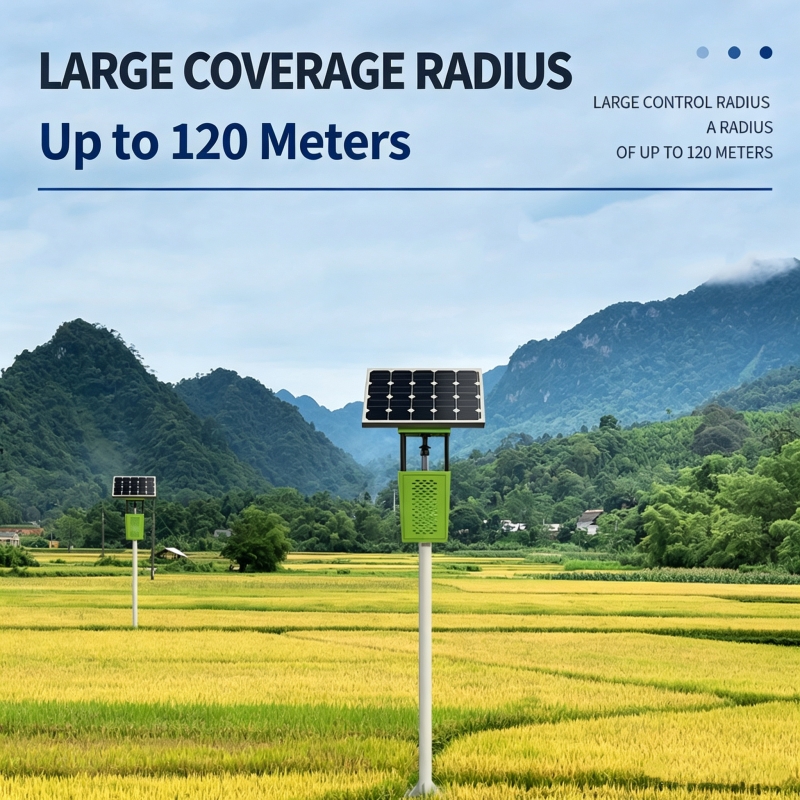
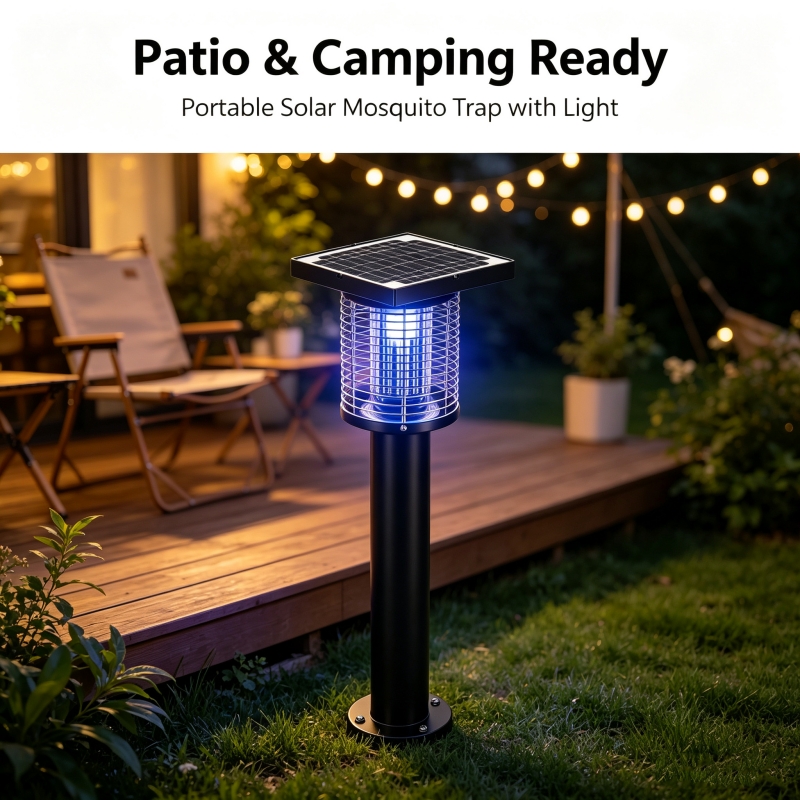
Solar‑powered insect traps fill this critical need for off‑grid outdoor environments. These devices require no hardwired electrical connection. They harvest energy from sunlight during daytime hours and run trapping systems automatically after dark. Users can move them freely between locations, perfect for camping trips, RV parks, remote farm sites and off‑grid properties. The global adoption of this technology is proven through real international client orders. One large order of six thousand solar insect traps shipped to Africa, where lack of grid power makes wired pest control unworkable. The zero‑electricity operating cost is a major advantage for communities and land managers in regions with limited power infrastructure.
Another genuine case comes from Kathmandu, Nepal. Property owners there select outdoor solar insect traps to turn their home gardens into usable outdoor living zones. The core objective remains consistent across continents: reduce pest pressure so people can comfortably spend time outside. Solar insect traps are produced in a wide range of sizes and configurations to match vastly different environments. Compact models suit private residential yards. Larger heavy‑duty units serve municipal parks, botanical gardens, vineyards and large agricultural estates. Buyers must select the correct specification based on their site's size and pest types. The broad product range is a result of mass manufacturing, which has brought overall costs down and made these solutions accessible for small households and large municipal projects alike.
Safety is the top concern for buyers in Europe, Australia and New Zealand. Homeowners repeatedly ask whether these traps pose risks to young children and pets. The modern solar insect traps use multi‑layer protective metal mesh grilles. The openings are narrow enough to prevent fingers or animal paws from touching the internal electrified grid. The high‑voltage grid operates on the same basic principle as widely used handheld electric fly swatters. While the grid delivers a shock to flying insects, the protective barrier eliminates accidental contact risk for humans and companion animals.
 ▲ Solar electric mosquito trap 050C — protective mesh grille, 2.5KV grid, pet-safe design
This physical trapping method uses no chemical sprays, no pesticides and leaves no toxic residues in soil or air. It works by attracting flying insects using ultraviolet light. Mosquitoes, moths and other flying pests are drawn toward the light source and captured once they enter the protective enclosure. These systems run autonomously at night after charging in sunlight during daytime. Thousands of these units have already been installed in public parks, farms, botanical spaces and private gardens worldwide, with proven real‑world performance.
Physical Rodent Control: No Poison, No Secondary Risks
Solar light traps are one pillar of multi‑layered physical pest management, but they only target flying insects. Rodents create a separate set of challenges across farms, estates, parks and residential buildings. Chemical rodent poisons carry well‑documented risks. Poisoned rodents may die in hidden spaces, creating odour and contamination. Poison also creates secondary poisoning hazards for predators, pets and wildlife that consume dead rodents. Physical rodent control avoids all of these risks.
For household DIY use, adhesive glue traps offer simple, non‑toxic rodent capture. These glue boards release no strong odours and can be placed along rodent travel paths, near wall gaps, sheds or storage areas. Homeowners can deploy them flexibly wherever rodent activity appears. For larger sites such as vineyards, big estates and public parks, more advanced physical rodent solutions are available. Smart monitoring traps and heavy‑duty live capture cages are designed for larger scale pest management. These intelligent physical traps can capture rodents without poison, with optional monitoring systems to track pest activity across wide areas. Combining smart rodent traps and adhesive boards creates a fully physical rodent control system, without chemical toxins.
 ▲ 35W Commercial Solar Mosquito Killer — portable, wire-free protection for campsites and remote sites
Separating Real Technology from Marketing Hype
It is important to separate genuine physical pest technology from marketing concepts with limited real‑world performance. Ultrasonic pest repellers are commonly sold online, yet independent field tests repeatedly show these devices have little to no reliable effect on mosquitoes, flying insects or rodents. These products rely on theoretical sound waves that fail consistently in real‑world outdoor environments. They are largely conceptual marketing items and should not be counted on for meaningful pest reduction. In contrast, physical capture solutions including solar light traps, sticky glue traps and smart capture cages deliver measurable results, proven by decades of field application.
Health Risks Make Physical Control a Public Priority
The broader value of multi‑layered physical pest management goes beyond comfort. Insects carry serious public health risks. Mosquitoes transmit dangerous pathogens including dengue fever and many other vector‑borne illnesses. When pest populations are high, people visiting parks, farms and backyards must cover their skin completely, limiting their ability to enjoy outdoor environments. Physical pest control cannot fully erase pests from open natural ecosystems. Insects and rodents are deeply integrated into natural environments and will continuously migrate into green spaces from surrounding areas. However, strategically placed physical trapping devices can suppress pest populations significantly in the zones where humans spend time. This creates safer outdoor spaces and lowers the risk of disease transmission for people and livestock.
Building a Layered Defence System
Integrated physical pest management builds a layered defence system tailored to different vertical spaces and pest behaviours. High‑mount solar light traps intercept moths and high‑flying insects in upper air zones. Ground‑placed traps target mosquitoes and low‑flying bugs close to lawns, bushes and wet soil. Rodent traps are positioned along ground runways near buildings and vegetation. By deploying multiple types of physical tools at different heights and locations, we create a complete ecosystem of pest suppression. This layered strategy is the core principle behind the multi‑level physical pest control approach. It does not rely on one single product to solve every pest problem. Instead, it matches each pest type and habitat with the most suitable non‑chemical capture tool.
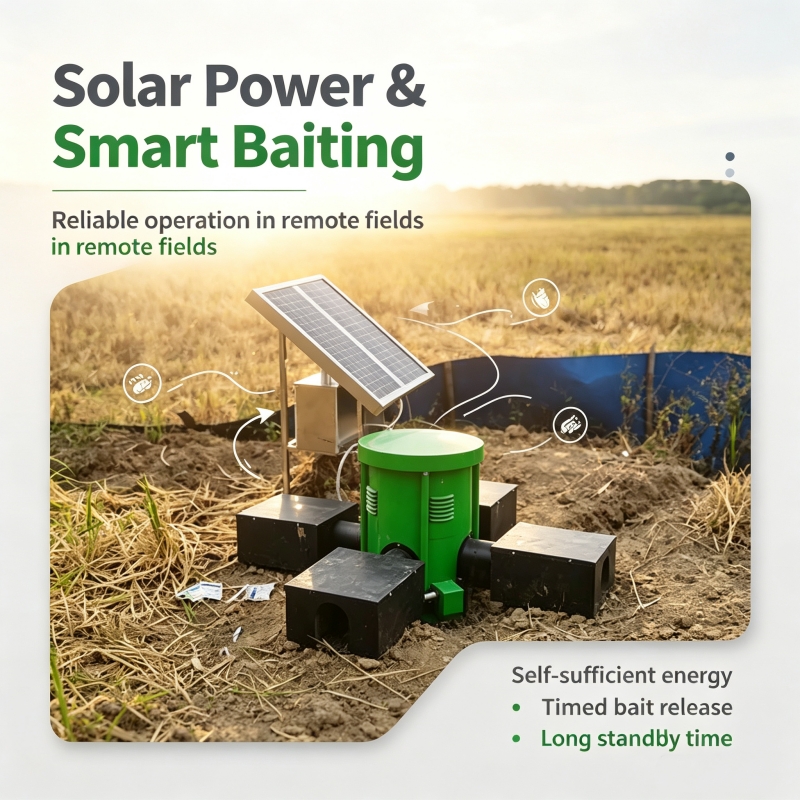 ▲ Smart Rodent Monitoring System — AI-powered physical rodent control for parks and large sites
Physical Trapping vs. Chemical Spraying
Traditional pest management for parks and large properties has long depended on periodic chemical spraying. Teams visit sites on a schedule to spray insecticides across bushes, ponds and shaded humid zones. This method delivers only temporary relief. Chemical sprays kill pests present at the moment of application, but new insects quickly migrate back into open parkland from surrounding wetland and green areas. Repeated spraying also harms beneficial pollinators, leaves chemical residues in soil and water, and raises health concerns for families visiting the park, especially young children. Physical trapping infrastructure works continuously day and night, providing long‑term pest suppression with zero pesticide release. This sustainable alternative fits the rising global demand for eco‑friendly integrated pest management (IPM).
Cost, Scale and Customised Planning
For property managers, landscape contractors, PCO service providers, farm owners and residential homeowners, the shift toward non‑chemical physical pest control offers clear advantages. Safety for children, dogs, cats and livestock is the primary priority. The absence of pesticide residues protects soil, plants and local wildlife. Solar‑powered units eliminate ongoing electricity bills and work in remote locations with no grid access. Different product sizes and configurations allow customised design, from a small family backyard to a sprawling municipal wetland park.
Many people ask about total project cost. Large‑scale physical pest systems are often assumed to be prohibitively expensive. Mass production has greatly reduced manufacturing costs, creating options for every budget. The key is matching the right product specification to the scale of the space. A small residential garden only requires compact solar traps, while public parks and vineyards need heavy‑duty, high‑capacity trapping equipment. Buying the wrong size will lead to disappointment, which is why site assessment and customised planning matter.
The Vision: Help Humans Safely Return to Nature
The vision behind multi‑layered physical pest management is simple: to help humans safely return to nature. Outdoor spaces exist for people to relax, connect and experience natural surroundings. Pest pressure should not stop families from enjoying park visits, stop campers from exploring wilderness, or make private backyards unusable. Physical trapping technology creates a middle ground between full chemical treatment and accepting overwhelming pest populations. It does not aim to sterilise nature or eliminate every insect, which would damage ecosystems. It protects human living zones by intercepting pests in spaces people actively use.
This approach is continuously refined through real projects across multiple countries. Every site presents unique conditions, pest varieties and environmental limitations. There is no universal one‑size‑fits‑all physical pest setup. If you face pest challenges in gardens, farms, parks, vineyards, campsites or residential estates, our team is available to discuss your site details. We can work with you to design custom multi‑layered physical pest management solutions tailored for your local environment and pest species. Our focus remains solving pest problems through safe, non‑toxic physical capture technology.
Design a Multi‑Layered Physical Pest Management Plan
Tell us your site type, acreage and pest pressure. We'll help you match solar insect traps, physical rodent control and monitoring tools into a custom chemical-free solution. OEM/ODM available.