
What Is Multi‑Level Spatial Physical Pest Control? A Practical Guide for Farm and Site Managers
A practical framework for targeting pests at different heights, zones and living habits — using matched physical tools layer by layer to cut reliance on chemical pesticides.
Many farm and site managers have heard about physical pest management, yet few truly understand what “multi‑level spatial deployment” means in real‑world farm, orchard and large‑site operations. It is not a fancy marketing slogan. It is a practical framework: targeting pests active at different heights, different zones and different living habits, applying matched physical tools layer by layer, so as to cut reliance on chemical pesticides.
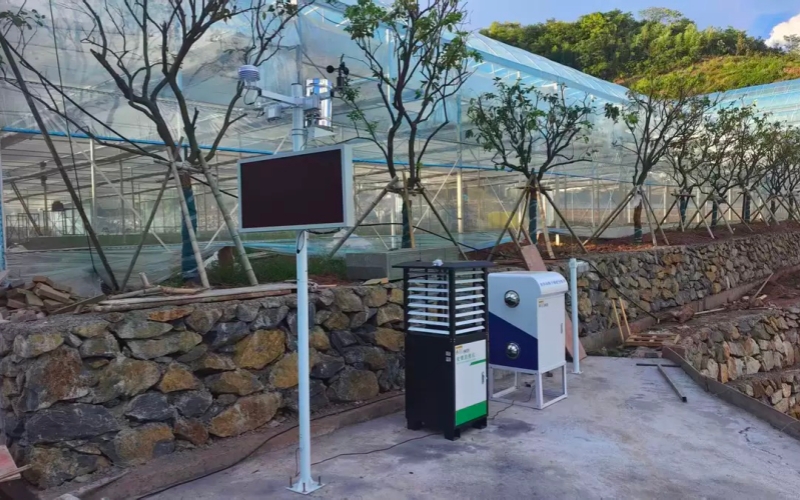 ▲ Integrated pest monitoring station — the intelligent brain of the multi-level system
High‑Level Zone: Tall Solar Suction Traps for Flying Pests
Pests do not all fly and live at the same altitude. Moths, large hard‑shell insects and crop‑destroying adults stay active in upper air zones, which threatens tall fruit trees, rice paddies and large plantations. For this high‑level layer, we deploy tall solar‑powered suction insect killers, installed at heights from 3 m up to 3.5 m above ground. These units target high‑flying moths and hard‑bodied pests that cause heavy yield losses for orchards and rice fields.
Different power grades deliver different effective coverage, ranging roughly from 10 acres up to 30 acres per unit, with typical practical coverage sitting around 20–25 acres. Based on total site acreage, we calculate and arrange the quantity of devices scientifically for each project. These solar suction insect traps run widely in rice paddies and commercial orchards, backed by numerous real‑world field cases. No wiring is required, and they operate at zero electricity cost.
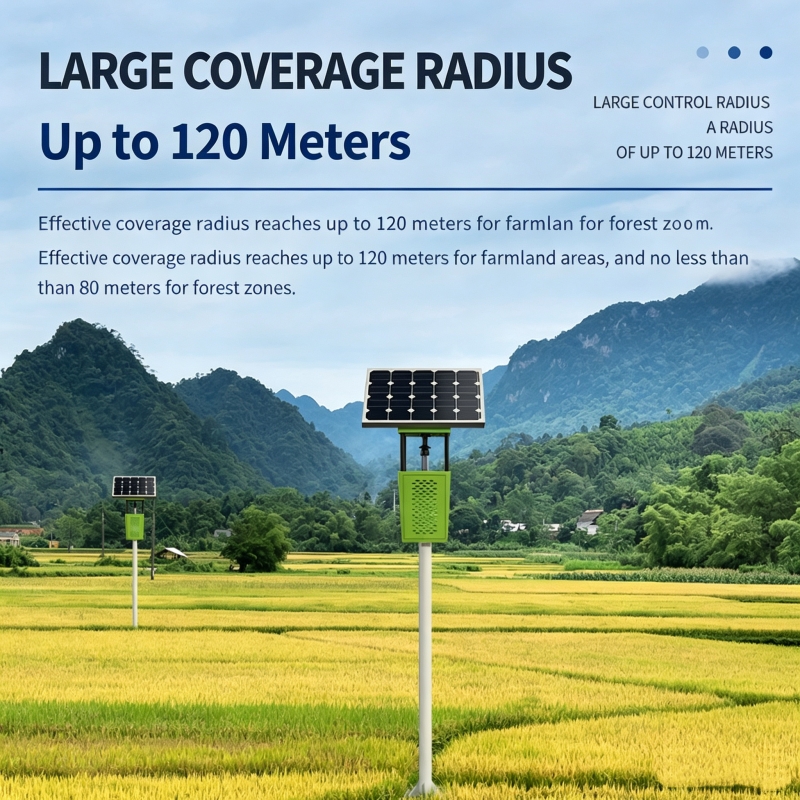 ▲ Solar wind-suction insect killer — high-level zone coverage without wiring
Mid‑Height Zone: Compact Solar Units for Orchard and Open Outdoor Spaces
Moving down to the middle‑height zone, around 1.5 m and below, another group of pests dominates. This layer covers medium‑height fruit trees, wetland edges and open outdoor spaces with dense insect activity. Here we apply mid‑size solar insect killers tailored for orchard environments. Their effective coverage normally falls between several hundred to one thousand square meters. Higher theoretical coverage figures often cannot be achieved under real heavy pest pressure in open farmland, which is an important point for site planners to recognise.
Compact stake‑in solar units standing at roughly 80 cm serve as supplementary points; some of these models double as site lighting. The tall high‑level devices usually require simple concrete foundations for stable installation, while these low‑profile stake‑in versions can be pushed directly into soil.
The Intelligent Brain: Solar Monitoring Stations
Integrated pest monitoring stations form the intelligent “brain” of the whole multi‑level system. Powered by solar energy, these stations deliver near‑360‑degree observation. Equipped with cameras ranging from 5 MP up to 20 MP resolution, they can trap insects while continuously capturing field pest‑density data. Farm and estate operators check real‑time insect population remotely via mobile APP. Based on actual observed pest pressure, they can adjust deployment instead of following rigid fixed schedules. Monitoring data guides where to place trapping hardware across the whole site.
Sticky Physical Trapping: Covering Finer Orchard and Crop Zones
Beyond light‑based electric and suction trapping, sticky physical trapping covers finer‑scale zones within orchards and crop fields. Sticky ball traps, coloured sticky sheets and sticky tapes target fruit flies and orchard‑specific pests. For greenhouse tomato crops, specialised sticky lure devices trap tomato moths. All of these work purely by physical adhesion, without chemical poison.
Physical exclusion represents another critical layer of our system. Fine mesh protective net bags for individual fruits shield ripening produce from pest damage before harvest. Different mesh sizes fit orchards, vineyards and greenhouse crops. Physical barriers stop pests from touching crops directly, lowering the chance of fruit rot and loss.
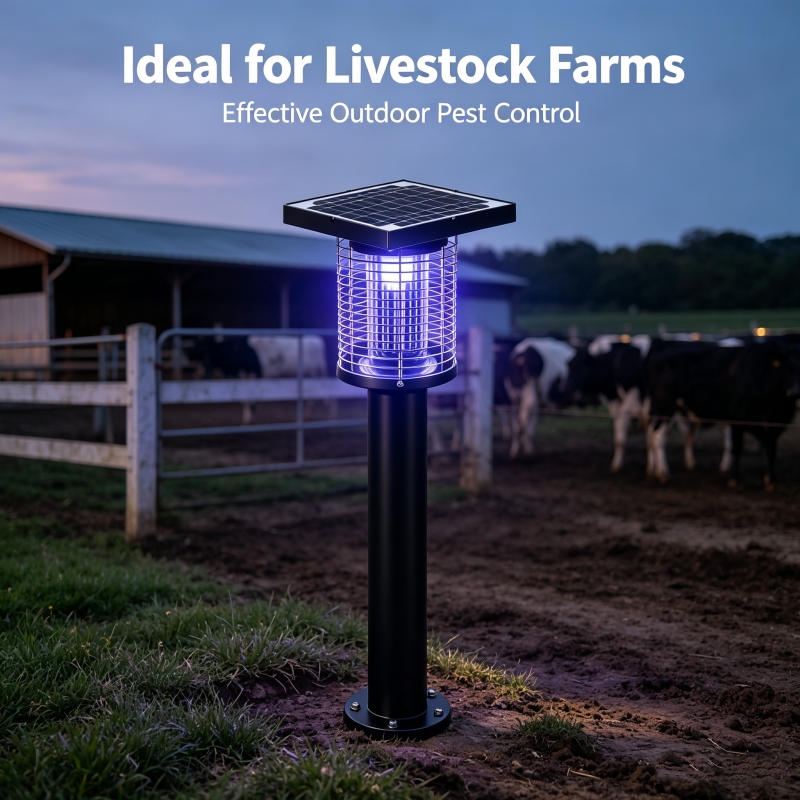 ▲ 2-in-1 pest killer lamp — combines trapping with site lighting
Ground and Underground Threats: Rodent Monitoring and Adhesive Defense
We also address underground and ground‑dwelling threats. Large plantations, vineyards and rice fields face constant pressure from rodents. Intelligent rodent‑monitoring stations with high‑definition cameras track rodent activity on‑site and offer trapping functions. For large‑scale commercial facilities, raw hot‑melt adhesive materials support custom on‑site coating solutions against rats and crawling insects.
Livestock and livestock‑housing sites bring unique challenges. Blood‑feeding insects bite animals and increase cross‑infection risks, which indirectly drag down animal production performance. Large‑volume sack‑style fly and insect traps are well suited for such semi‑open barn environments. Where permanent installation cannot cover every corner, portable mobile solar‑powered trapping units fill gaps across the site. All solar‑driven hardware avoids cable laying and ongoing electricity expenses.
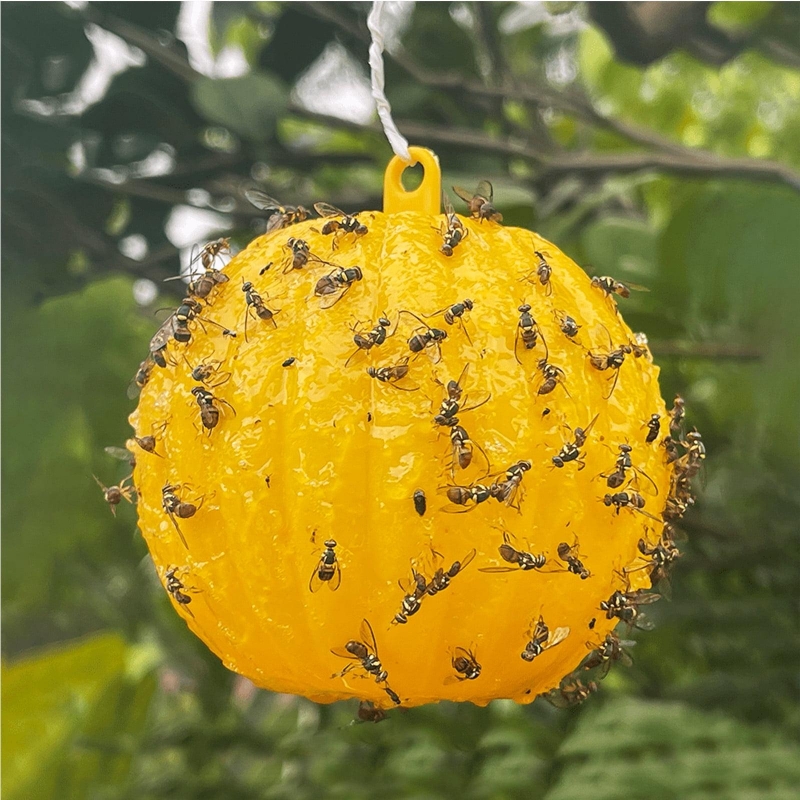 ▲ Sticky ball traps — targeted physical adhesion for fruit flies and orchard pests
Indoor and Semi‑Indoor Commercial Spaces
Human‑occupied indoor and semi‑indoor commercial spaces require their own physical trapping setup. UV sticky fly traps deliver chemical‑free fly and mosquito control for restaurants, food‑processing plants and public facilities. For sites that also need ambient lighting, the 2-in-1 pest killer lamp with lighting function combines insect trapping with site illumination — practical for courtyards, entrances and open commercial zones.
Every Site Is Different: Build a Custom Layered Solution
Every farm, vineyard, rice paddy, greenhouse, wetland resort or municipal park faces a unique mix of pest species, crop types, terrain and insect density. There is no one‑size‑fits‑all kit. Multi‑level spatial physical pest control means assessing each site first, then combining high‑altitude suction traps, mid‑height solar units, monitoring stations, sticky trapping tools, physical exclusion netting, rodent monitoring and supplementary portable devices into a custom‑built layered solution.
Our Core Goal
Our core goal remains consistent: suppress pest pressure across every vertical zone with physical means — suction, electric shock, sticky capture and physical barrier. Reduce over‑reliance on chemical spraying, protect harvest quality, and support sustainable agricultural and outdoor‑site management.
If you want to explore which physical tools fit your site best, browse our product range or contact our team to discuss a suitable multi‑level solution for your farm, orchard or commercial project.
Build a Multi‑Level Physical Pest Control Plan
Tell us your site type, acreage and pest pressure. We will help you match high‑level, mid‑height, ground and monitoring tools into a custom layered solution. OEM/ODM available.