
Wind‑Suction Insect Traps for Livestock Barns: Stop Insect‑Borne Disease & Support Healthy Animal Growth
Physical wind‑suction traps for pig farms, horse stables, poultry houses and dairy barns — reduce disease vectors and improve animal welfare without chemicals.
For pig farms, horse stables, poultry houses and dairy barns, insects are far more than just a minor nuisance. Open‑sided livestock sheds are designed for ventilation and animal welfare, yet this open layout also lets swarms of mosquitoes, flies and biting insects move freely across the entire facility.
Many farm operators underestimate the real risks brought by constant insect activity. When biting insects feed on one sick animal and then move to bite healthy livestock, they act as transmission vectors for viruses and pathogens. Insect‑borne spread can trigger outbreaks of disease across herds, leading to veterinary costs, reduced animal performance and avoidable farm losses. This is well‑documented within agricultural veterinary research; cross‑infection via insect bites is a persistent challenge for commercial livestock operations worldwide.
Beyond disease risk, non‑stop insect harassment affects animal behaviour day and night. Cattle, horses, pigs and poultry become restless, agitated and stressed from repeated biting. Stressed animals eat less, sleep poorly and cannot devote energy to weight gain or milk production. Over time, continuous insect pressure directly drags down farm productivity and profitability.
Lots of producers still rely on chemical sprays to suppress barn insects. Chemical treatments bring clear downsides: repeated spraying adds ongoing operating costs, chemical residues raise food‑safety concerns, and chemicals only deliver short‑term relief. Sprays kill insects present at the moment of application, yet new insects keep flowing into ventilated barn spaces. Chemical approaches cannot deliver stable, around‑the‑clock protection. Physical wind‑suction insect traps offer a practical, verified alternative for livestock facilities.
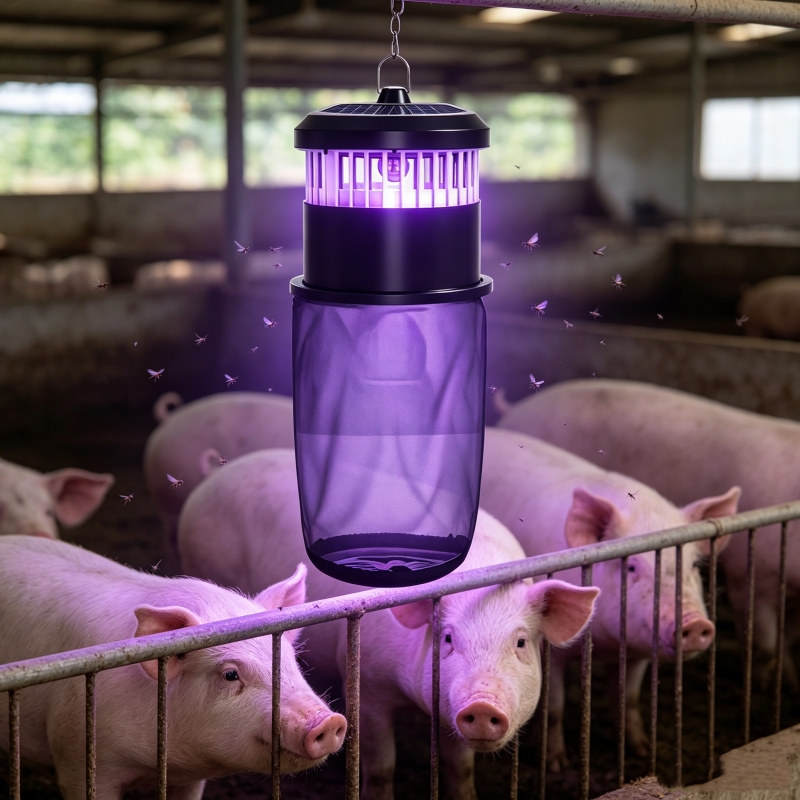
 ▲ Hanging wind‑suction trap inside pig barn — continuous physical insect suppression
How Insect Pressure Harms Your Livestock Operation
Two core threats come from heavy insect populations inside livestock barns: disease transmission and suppressed animal growth.
First, vector‑borne disease risk. Mosquitoes and biting flies carry pathogens between animals. One single insect can bite multiple livestock in a short period, spreading infection rapidly across pens. For large‑scale farms, an infectious event triggered by insect activity can mean high vet bills, quarantine measures and production losses. Preventative insect control is not optional maintenance; it is part of basic biosecurity management.
Second, chronic stress limits production. Constant biting keeps animals restless. Horses stamp and kick; pigs cannot rest comfortably; poultry stay agitated. For farmers, peaceful rest and consistent feeding are essential for weight gain, milk output and overall livestock condition. When insects never relent, animals cannot thrive, even with high‑quality feed and good barn management.
Traditional chemical spraying cannot fully solve this dilemma. You spray, insect numbers drop temporarily, but new insects keep entering through ventilated walls and open barn sides. You repeat spraying cycles, chemical expense accumulates, and you still face ongoing insect pressure. Many farm owners are searching for low‑cost, non‑chemical solutions that run continuously without human‑operated spraying cycles.
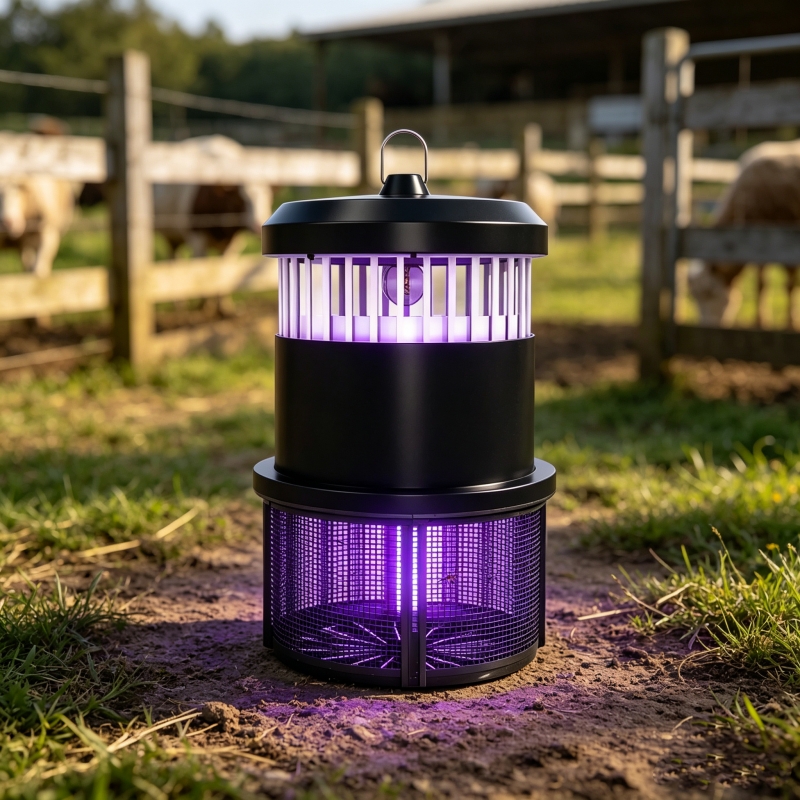
 ▲ Wind‑suction trap hung in outdoor farm yard — versatile for covered areas
Wind‑Suction Hanging Insect Trap: Practical Physical Pest Control for Livestock Facilities
Our hanging wind‑suction insect trap is engineered for real‑world livestock environments. This is mains‑powered low‑energy unit built for long‑duration operation inside ventilated barns, stables and poultry houses.
UV light lures flying insects, and built‑in fan suction draws insects into the fine mesh collection net. Insects are captured inside the net bag, removing them from the animal living area. It runs with low power consumption and can operate day and night, delivering continuous physical suppression instead of short‑lived chemical shocks. The large‑capacity collection net suits locations with heavy insect populations; users simply take down and clean the net periodically.
Some buyers question whether an economical‑priced unit can perform well in high‑insect farm settings. Field feedback from existing livestock customers confirms its performance. Many commercial barn operators report noticeable improvements after installation. It does not promise 100% instant elimination of every insect, but it steadily reduces overall insect populations, lowers biting pressure on animals and eases the burden of insect‑related farm issues.
It fits many types of animal housing: pig barns, horse stables, dairy sheds, chicken and duck houses, as well as covered outdoor farm yards. Hanging installation keeps the unit out of animal reach and saves floor space, which works very well for busy livestock sites. Without chemical agents, there is no residue risk for livestock and farm produce.
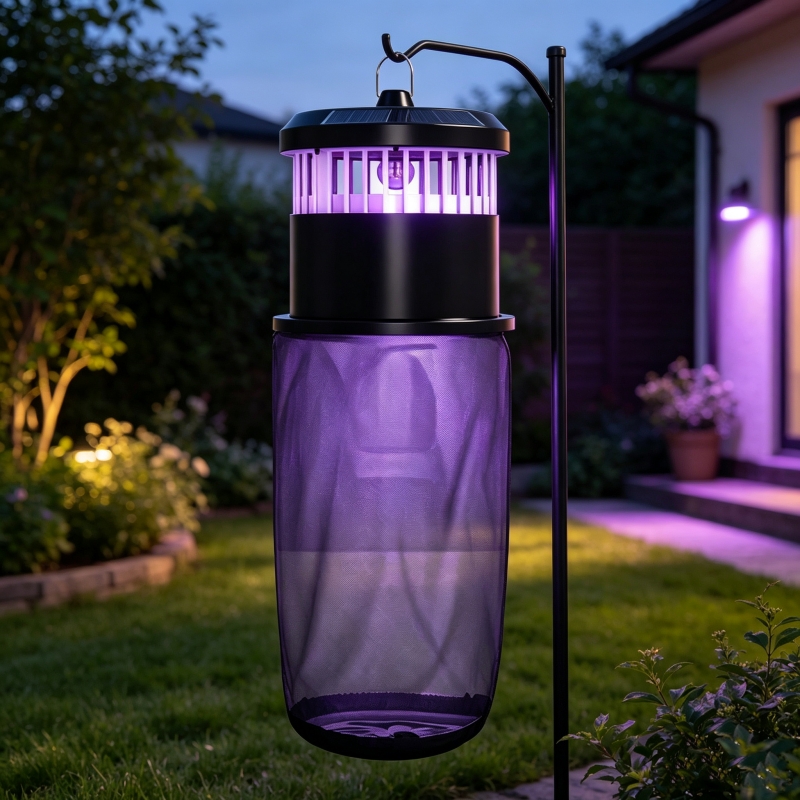
 ▲ Close‑up of the hanging net‑bag trap — UV light + fan suction capture
Real‑World Benefits for Commercial Farmers
When deployed as part of your farm biosecurity work, this physical insect trap brings tangible practical benefits:
- Reduce insect‑borne cross‑infection risk within your herd, supporting farm biosecurity.
- Less biting stress lets livestock feed and rest better, creating favourable conditions for weight gain and production performance.
- Cut repeated spending on chemical insecticide sprays. Once installed, running cost stays low.
- 24‑hour physical suppression works continuously, filling gaps between manual chemical spray cycles.
We do not claim this single trap solves every pest challenge on its own. Effective farm pest management often requires multi‑layer physical prevention. This hanging wind‑suction trap is one robust component within your complete pest‑control toolkit.
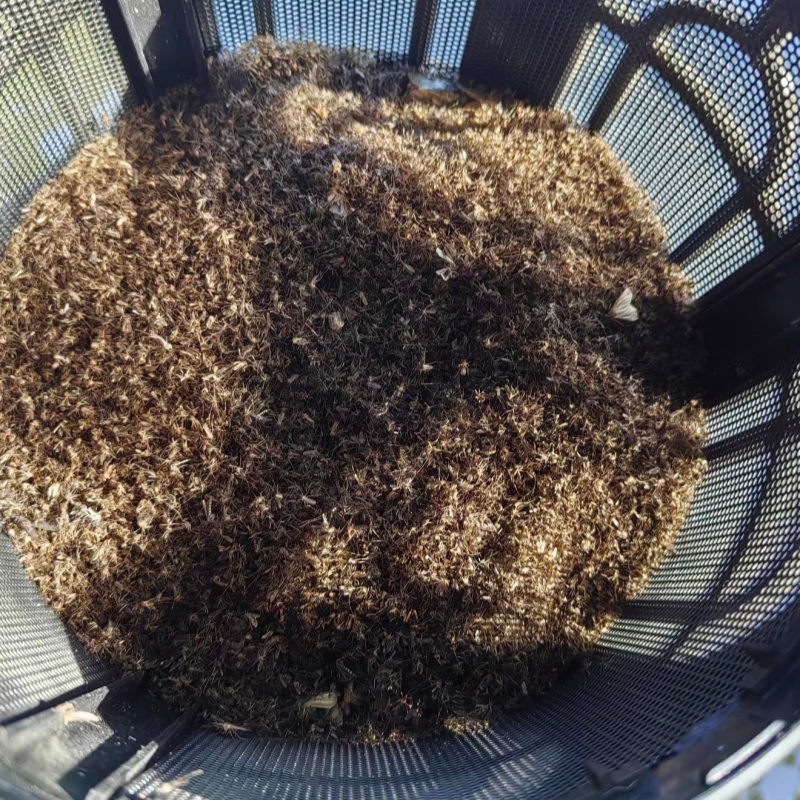 ▲ Wind‑suction trap deployed in farm setting — flexible and chemical‑free
Closing
Insect‑related problems cost livestock farms money in hidden ways: disease treatment, animal stress and reduced production, plus recurring chemical expenses. Physical wind‑suction insect traps provide a proven, affordable approach to ease these pains for pig, horse, dairy and poultry operations.
If you want to explore more multi‑layer physical pest‑control solutions for farms, read our other blog articles on physical pest management. You are welcome to contact our team to discuss suitable product combinations for your site, to help you lower operating costs and support better livestock yields.
Protect Your Livestock — Without Chemicals
Whether you manage a pig farm, horse stable, dairy or poultry facility, we offer wind‑suction physical pest control solutions for wholesale and project‑level cooperation. OEM/ODM available.