
Integrated Farm Pest Management: Complement Chemical Control With Physical Trapping Solutions
Discover how sticky insect balls and solar-powered lamps work together to reduce chemical dependency and protect crops in orchards, farms, and plantations.
Flying insect pests are an unavoidable challenge for farms, orchards, vegetable plantations and landscape parks. Where irrigation ditches stand, where soil stays damp, insect populations will naturally multiply. No farming region can completely erase pests from the environment, as they are part of the natural ecological cycle. For growers all over the world, the real‑world goal is not total extermination, but to suppress pest pressure to acceptable levels, protect crops, and secure better harvest income.
Most agricultural operators rely heavily on chemical pesticide spraying as their primary pest‑control measure. Chemical treatments can knock down large insect numbers quickly, delivering immediate visible results. Nevertheless, many farmers have experienced the recurring cycle that comes with over‑reliance on chemicals. Spraying kills a portion of the active pests, yet new swarms keep breeding in surrounding damp habitats. After pesticide effects fade, flying insects return again and again. This creates a vicious loop: repeated spraying, rising input costs, potential chemical residue risks, and still no fundamental solution to the ongoing pest threat. Chemical spraying remains a necessary tool in modern agriculture, but it cannot bear the whole burden of field pest management alone. This is exactly where physical trapping systems come in as a valuable supplementary strategy, rather than a full replacement for existing chemical work.
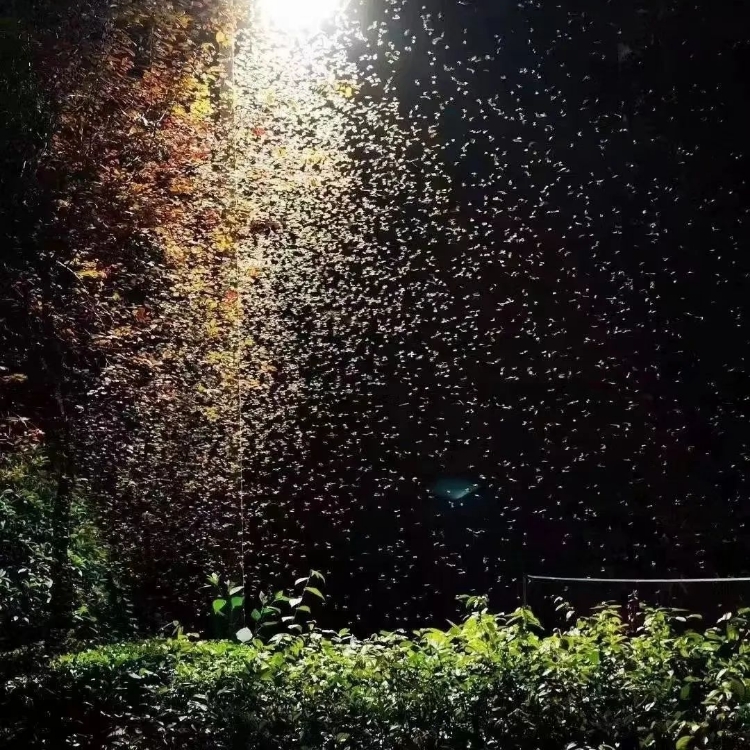 ▲ Damp habitats near irrigation ditches naturally attract flying insect populations
Day‑and‑Night Physical Trapping Combination
Two physical trapping products form a practical day‑and‑night combination for open‑air field environments: sticky insect balls / glue traps for daytime operation, and solar‑powered outdoor insect lamps that run through the night.
During daylight hours, sticky insect balls and glue boards hang directly among crop branches and plant rows. Positioned close to fruits, leaves and growing vegetables, they intercept flying pests when insects move around feeding and breeding. They build up localized protective points right where crops grow. These sticky traps cover targeted zones within the orchard or farmland.
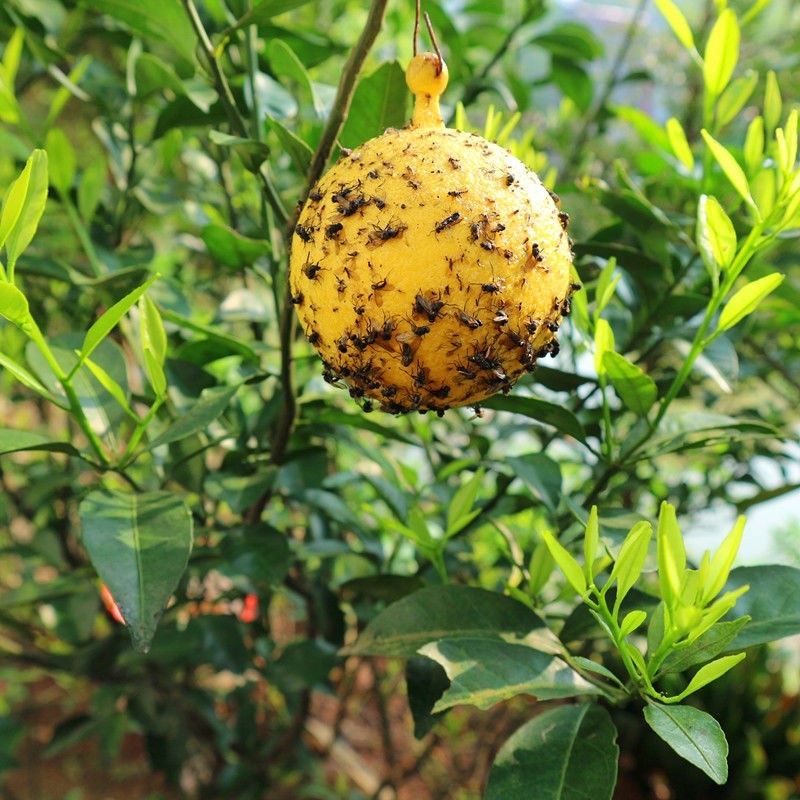 ▲ Sticky insect balls hanging among crop branches — daytime protection at the plant level
Once night falls, solar insect lamps begin to work. Installed along field ridges, beside irrigation channels and around the perimeter of planting areas, they draw flying insects over wide outdoor ranges. Powered by solar energy, they operate automatically after sunset, continuously trapping pests throughout the night. While sticky balls focus on crop‑side protection, solar lamps help reduce the overall pest population across the whole surrounding environment.
Complementary Protection, Reduced Chemical Dependency
Used together, these two solutions expand your protection coverage. Sticky trapping handles close‑range crop defence in the daytime; solar lamps suppress background pest numbers overnight. They complement each other instead of competing. Farmers do not need complex operation. The main ongoing work is simple regular cleaning of trapped insects. Compared with continuous chemical procurement, the long‑term running cost is relatively low for agricultural projects.
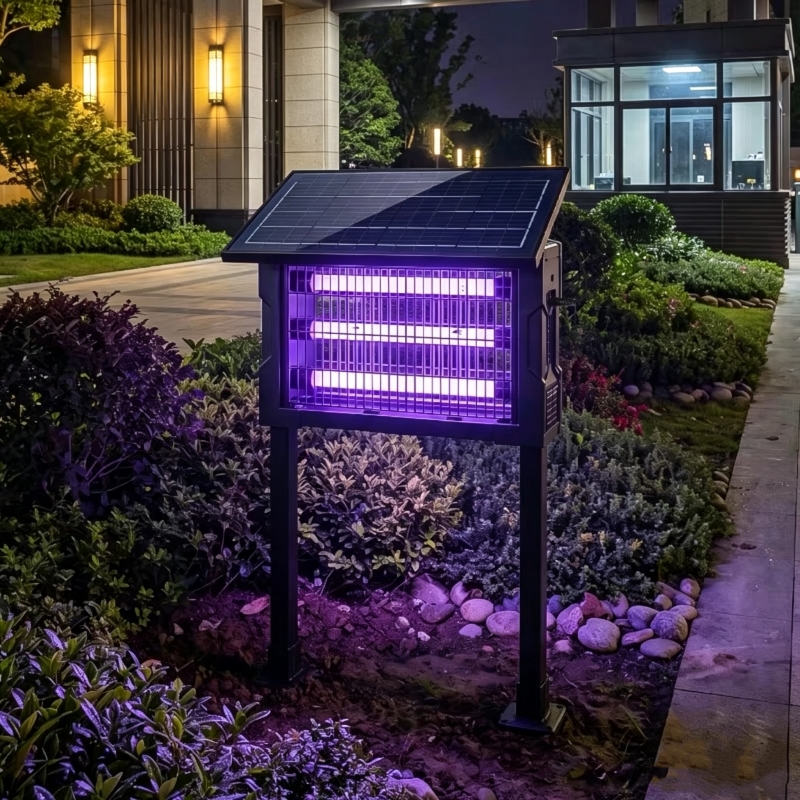 ▲ Solar-powered insect lamp installed along field ridges — automatic nighttime operation
Realistic Expectations: Reduce, Not Eliminate
It must be stated objectively: physical trapping equipment will not wipe out every pest in the field. Humid micro‑habitats will keep generating new insects, and zero‑pest conditions do not exist in real farming scenarios. What this set‑up achieves is lowering pest density significantly, reducing the frequency and dependency on chemical sprays, and cutting down crop damage caused by flying insects. For orchard owners, vegetable farmers and landscape contractors, the economic benefits outweigh the inputs. Less crop loss means more stable yields and better revenue.
Many industry practitioners question whether it is possible to gain control when facing massive swarms of field insects. The answer seldom lies in one single magic product. Real progress comes from integrated thinking: keep reasonable chemical control routines, and layer physical trapping tools to share the workload. This balanced approach represents human practical exploration in harmony with nature.
As a supplier of physical pest‑trapping solutions, we provide sticky insect balls, glue boards and solar outdoor insect lamps for wholesale and project‑level cooperation for agriculture and landscape clients.
Watch: Integrated Pest Management in Action
View our on‑site field video below to see real‑world pest conditions and solution demonstrations:
Ready to Reduce Chemical Dependency on Your Farm?
Whether you need sticky traps, solar insect lamps, or a complete integrated pest management solution, we offer wholesale and project-level cooperation for agriculture and landscape clients worldwide.