
How To Evaluate Quality of UV Fly-Trap Glue Boards
In commercial pest management, initial out-of-the-box stickiness is rarely a reliable metric for long-term effectiveness. Almost any pressure-sensitive adhesive (PSA)—even inexpensive hot-melts—feels sticky to the human touch when first unpeeled. Many buyers and distributors mistakenly judge glue board quality only by this fresh tackiness, unaware that real performance differences only appear after weeks of continuous operation under UV light, temperature changes, and harsh workshop environments.
The true measure of a commercial glue board is its rheological stability: its ability to maintain a balance between surface tack (to catch the fly on impact) and cohesive strength (to hold the fly under kick-back force) while exposed to continuous UV radiation, high ambient temperatures, and airborne contaminants.
1. Why All New Glue Boards Catch Flies Well—And Why Performance Diverges (10–40 Days)
When a glue board is unpeeled, its surface layer is pristine, free of oxidation, and wet enough to grab tiny insect feet instantly. However, under real-world operational conditions inside an Insect Light Trap (ILT), performance drops significantly within 10 to 40 days due to three degradation mechanisms:
- UV Photo-Oxidation & Free Radical Cross-linking: Continuous UVA radiation (365 nm) breaks down the polymer chains within standard adhesives. This triggers secondary cross-linking, causing the top layer of the glue to harden into an invisible, non-tacky "skin" (a process called surface oxidation). A fly landing on a skinned-over board simply walks across it or bounces off.
- Plasticizer Migration & Evaporation: Low-cost adhesives rely on volatile liquid plasticizers to achieve high initial tack. Constant exposure to light and localized heat from UV tubes accelerates the evaporation and migration of these additives into the paperboard backing, drying out the glue layer.
- Contaminant Micro-Layering: In bakeries and processing plants, airborne flour dust, oil droplets, and fine particulates settle onto the glue board. Inferior adhesives fail to absorb or "bleed through" these microscopic particles, quickly creating a dry barrier layer over the active adhesive surface.
2. Environmental Impact on Adhesive Durability
The biggest industry misunderstanding is using one universal glue board formula for all global regions. Temperature, humidity, and climate directly determine glue service life—standard generic boards fail easily in extreme environments.
High-Temperature Climates (Middle East)
- The Challenge: Ambient room temperatures near cooking stations or in non-air-conditioned facilities often reach 40°C–50°C, compounded by heat generated by adjacent 18W–36W UV ballast systems.
- Failure Mechanism: Standard adhesives experience a dramatic drop in viscosity (liquefaction). The glue sags, runs, or pools at the bottom of vertical traps. When a heavy insect (like a blowfly) lands, the glue lacks cohesive shear strength, allowing the fly to pull free, leaving only a leg or wing behind.
Cold / Low-Temperature Environments (Canada, Northern Europe, Refrigerated Stores)
- The Challenge: Unheated loading docks, chilled prep rooms, and cold storage areas operate between 2°C and 10°C.
- Failure Mechanism: Low temperatures push adhesives below their Glass Transition Temperature (T_g). The polymer chains freeze and lock up, turning the glue brittle and glassy. The board loses its "initial wet-tack," meaning insects landing on the surface bounce right off because the glue cannot deform fast enough to grab the legs.
High-Humidity / Tropical Climates (Southeast Asia)
- The Challenge: Relative humidity consistently exceeds 80%–90%, combined with high ambient heat.
- Failure Mechanism: Standard cardboard backings absorb atmospheric moisture, swelling, warping, and causing the adhesive layer to delaminate from the board. Hydrolysis can also break down low-grade synthetic rubbers, causing the adhesive to become a stringy, non-functional gel.
3. General-Purpose Hot-Melt vs. UV-Stabilized Polyisobutylene (PIB) Glue
The choice of polymer backbone dictates how a glue board behaves under 24/7 exposure to 365 nm UV light:
| Parameter | General-Purpose Hot-Melt (EVA / SBS Rubbers) | UV-Stabilized Polyisobutylene (PIB) Compound |
|---|---|---|
| Polymer Chemistry | Unsaturated carbon-carbon double bonds (highly reactive) | Fully saturated hydrocarbon backbone (chemically inert) |
| UV Resistance Mechanism | Unprotected; UV breaks double bonds rapidly, causing chain scission or over-crosslinking | Naturally UV-resistant; enhanced with Hindered Amine Light Stabilizers (HALS) and UV absorbers |
| 40-Day UV Exposure Effect | Forms a hard, non-tacky surface skin within 7–14 days | Retains 85%–90%+ of its original surface tack and flexibility after 60+ days |
| Temperature Tolerance | Narrow operating window; melts easily above 38°C, hardens below 12°C | Wide operating window (-5°C to 60°C); stable viscosity |
| Dust Absorption | Low; dust forms an impermeable layer over the glue surface | High "cold flow" properties; slowly engulfs micro-dust particles to maintain a tacky surface |
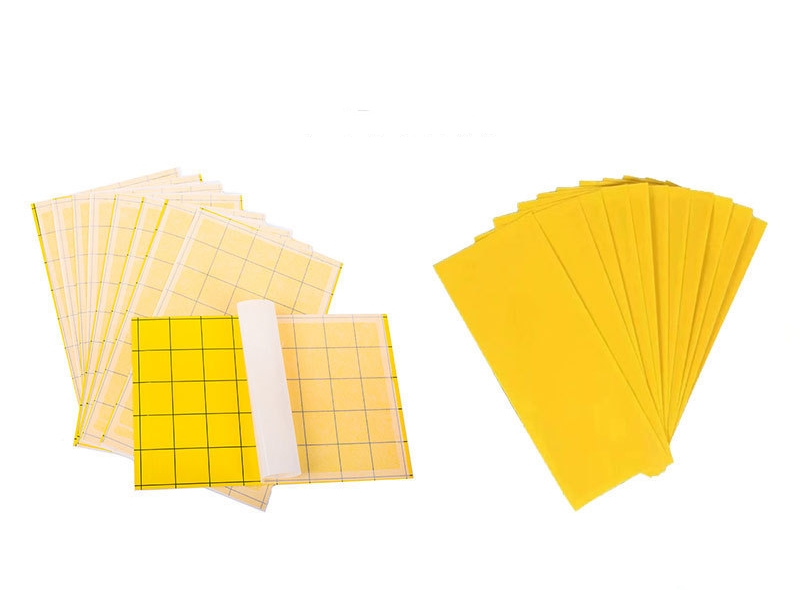 ▲ Ordinary standard universal glue board (quickly forms a hard surface skin under UV)
4. Realistic Replacement Cycles by Climate Zone & Application
While marketing material often claims "3-month protection," realistic operational maintenance schedules for HACCP-audited facilities vary significantly based on environmental stressors:
- Standard Processing / Ambient: Replace every 30 – 45 Days
- High Dust / Bakeries / Flour: Replace every 14 – 21 Days
- High Temp / Middle East: Replace every 21 – 30 Days (Check for flow)
- Cold Storage / Chilled Prep: Replace every 45 – 60 Days (Requires Cold-Grade PIB)
Hot / Arid Environments (Middle East, Summer Indoors): Inspect every 14 days; replace every 21–30 days. High heat accelerates oxidation and requires monitoring for adhesive running.
High Dust / Organic Powder Environments (Bakeries, Mills, Flour Handling): Replace every 14–21 days. Replacement frequency here is dictated by physical dust coverage rather than glue degradation.
Tropical / High Humidity (Southeast Asia): Replace every 30 days. Requires water-resistant Polyethylene (PE)-coated or plastic board backings to prevent moisture warping.
Cold Storage / Refrigerated Food Prep (0°C to 8°C): Replace every 45–60 days. Low temperatures preserve the glue from oxidation, but special sub-zero PIB formulations must be used to prevent glassification.
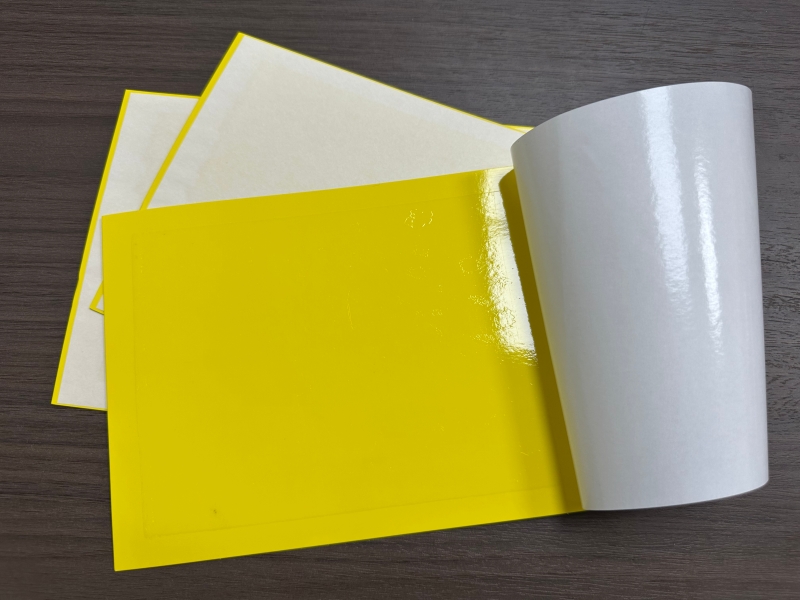 ▲ Our customized climate-resistant PIB glue board (stable and tacky even after 60 days)
5. Essential Procurement Questions for Buyers & Distributors
To avoid purchasing inferior glue boards that fail midway through an audit cycle, procurement teams and pest control managers should move beyond simple "stickiness" demonstrations and ask OEM suppliers these technical questions:
- "What is the polymer base of your adhesive, and what specific UV stabilizers (HALS / UV absorbers) are incorporated into the mix?"
- "Can you provide Accelerated UV Aging Test Data (e.g., ASTM G154 or equivalent) showing tack retention after 300+ hours of continuous UVA exposure?"
- "What is the recommended operating temperature window (T_g to softening point) for this specific adhesive formulation?"
- "What coating weight (Grams per Square Meter - GSM) of glue is applied to each board?"
- "Is the paperboard carrier laminated or moisture-barrier coated, and is the release paper siliconized on both sides?"
6. Our Unique Custom Solution: Climate-Based Glue Board Formulation
Most fly trap sellers only provide universal standard glue boards. They have no independent adhesive research and development capability, so they cannot adjust formulas to adapt to different global climates. One single generic product is sold to all customers worldwide, which leads to fast failure in extreme hot, cold, or humid environments.
As a source manufacturer with in-house glue formulation technology, we deliver tailored glue board solutions for different regional working conditions.
Before every order confirmation, we confirm the customer's local climate, ambient temperature, humidity level, and workshop environment. We then match the most suitable PIB adhesive formula, glue thickness, and waterproof backing material specifically for their region:
- High-temperature anti-flow formula for Middle East markets
- Low-temperature anti-brittle formula for Northern Europe and cold storage rooms
- Moisture-proof anti-delamination formula for Southeast Asian tropical areas
This climate-customized manufacturing model ensures stable long-term adhesion performance, maximizes service life, and helps food factories and pest control distributors pass HACCP audits smoothly all year round.
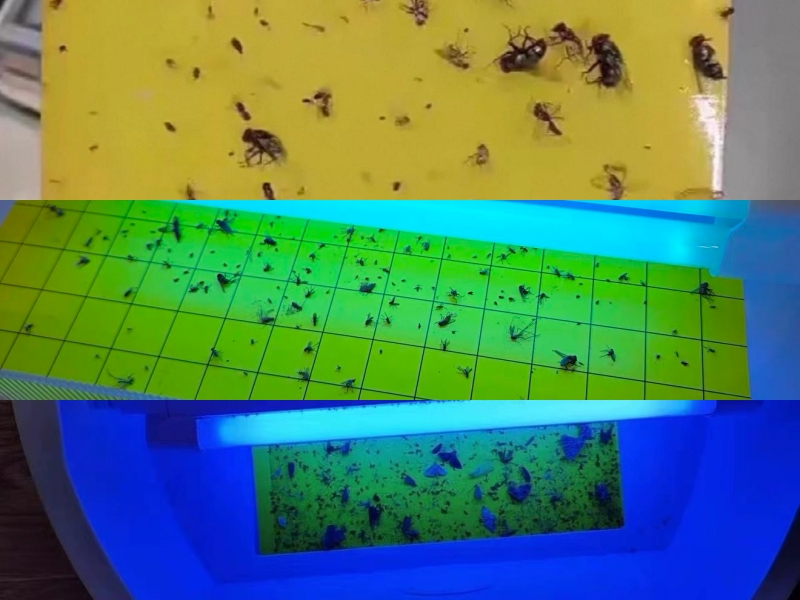 ▲ Real onsite fly trapping effect display
Learn More: Glue Board Quality Explanation Video
Watch the short video below to better understand the differences in adhesive technologies used in commercial fly traps:
Looking for High-Performance, Climate-Adaptive Glue Boards for Your Region?
We supply climate-customized PIB glue boards and complete commercial fly trap units for global distributors. Let's discuss your specific environmental requirements.